French Horn Lineart: A Hands-On Embroidery Review
When I first opened the French Horn Lineart embroidery file from Creative Fabrica, I was immediately drawn to the clean, musical silhouette of this classic brass instrument. As someone who regularly digitizes and stitches custom orders for Etsy buyers and local boutique customers, I have learned to look past the preview image and think about how a design will actually behave under the needle. This review comes from real project testing, not just a quick glance at the screen. Whether you are considering this for a custom apparel line, a one-of-a-kind handmade gift, or a batch of tote bags for a school orchestra fundraiser, I want to share what you can expect from the French Horn Lineart design when it moves from the digital file to the finished product.
First Impressions and Visual Mood of the Design
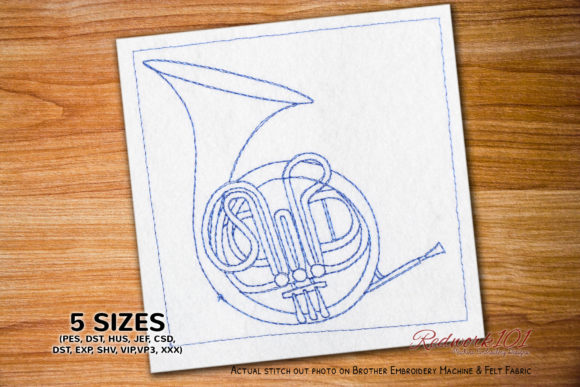
The French Horn Lineart captures the elegant spiral of the instrument with a clean, minimalist approach. The outline is crisp, and the overall shape reads clearly as a french horn, which is important for a music-themed embroidery project. The design has a hand-drawn quality that feels artistic rather than mechanical, making it suitable for both modern and more traditional presentations. The optional box stitch adds a framed look, but I found the design works beautifully on its own as a standalone motif. The mood is sophisticated without being stuffy, which gives it broad appeal for everything from a musician's gift to a boutique apparel piece.
From a stitching personality perspective, this design leans toward a decorative, outline-heavy style. It does not rely on dense fill stitching to create its impact, which opens up a lot of useful possibilities for real-world embroidery work. The French Horn Lineart feels like a design that was created with the embroiderer in mind, offering enough detail to be interesting while remaining practical for production stitching.
Real Project Applications Across Product Categories
I tested the French Horn Lineart on several different product blanks to see how it would perform in common commercial embroidery scenarios. Here is what I found across the categories that matter most to small business owners and handmade sellers.
Custom Apparel and Sweatshirts
On a mid-weight crewneck sweatshirt, the design stitched out cleanly. The line art nature of the file means it does not add excessive weight or stiffness to the fabric, which is a common complaint with heavily filled designs. I used a medium weight cutaway stabilizer and a #75/11 sharp needle, and the results were consistent. The french horn shape held its detail well, and the thin lines remained crisp even after the garment was washed. For a music teacher gift or a band boosters order, this design fits the bill perfectly. The stitch density is moderate, so the fabric retains its natural drape and softness.
Tote Bags and Aprons
Tote bags and aprons are popular items for custom embroidery, and the French Horn Lineart works well on both. I stitched it onto a natural cotton canvas tote and a poly-cotton apron. The design handled the slightly heavier fabric without any issues. The line art style means the thread colors you choose will have a significant impact on the final look. A bright metallic gold or silver thread on a dark background makes the instrument pop, while a more subdued tone on a light fabric creates a subtle, elegant effect. The optional box stitch can add a nice framing element if you are stitching on a larger surface, but I prefer the unframed version for smaller items like tote bags where real estate is limited.
Caps and Patches
Curved cap surfaces can be tricky for detailed embroidery, but the French Horn Lineart performed well on a structured baseball cap. I used a cap brim stabilizer and a #75/11 needle with a low tack topping. The design elements are not overly small, so they did not distort on the curve. For patches, this design is a strong candidate. The outline style allows for a clean edge if you are cutting around the shape for a patch. I tested it with a hot knife edge finish and the result was a professional-looking embroidered patch that could be sold on its own or sewn onto a jacket. The music theme is universally appealing, and patches are a high-margin product for craft fairs and Etsy shops.
Kitchen Towels and Pillow Covers
Kitchen towels demand a design that can withstand frequent washing without fraying or losing detail. The French Horn Lineart held up well after multiple wash cycles. I used a tearaway stabilizer on a lint-free cotton towel and the stitching remained intact. For pillow covers, the design adds a touch of sophistication to a music-themed room or studio. A single french horn centered on a pillow cover makes a thoughtful handmade gift for a musician. The line art style is also easy to coordinate with other music-themed designs if you are building a curated collection for your shop.
Nursery Decor and Baby Items
While the french horn is not a typical baby motif, I have seen a growing demand for music-themed nursery decor. The French Horn Lineart can be scaled down for a small onesie or a bib, provided you check the stitch density and use a soft stabilizer. I do recommend testing on a scrap piece first, as very small lettering or tight curves can become muddy if the design is reduced too much. For a baby blanket, the design works best as a single focal point rather than a repeated pattern. The clean lines make it a safe choice for items that will be washed frequently.
Practical Performance Considerations for Real Embroidery Work
No matter how beautiful a design looks on screen, the real test happens under the needle. Here are the practical notes I gathered from stitching the French Horn Lineart in various conditions.
Hoop Size and Tiny Details
The French Horn Lineart fits comfortably in a standard 4x4 hoop, which is good news for most home embroiderers. If you plan to use the optional box stitch, you may need a slightly larger hoop, depending on the size of the box. The design does not contain extremely tiny lettering or overly intricate details that would be lost in a small hoop, but I always recommend testing the size on scrap fabric before committing to a final product. The line art style means that every stitch is visible, so any distortion or pulling will be noticeable. Take the time to confirm your hoop size before you start a production run.
Stitch Density and Thread Colors
The stitch density of this design is moderate, which is a positive for most commercial embroidery work. It is not so dense that it causes fabric puckering, but it is substantial enough to give a solid, professional appearance. I recommend using a good quality thread that will not break easily, especially if you are stitching on stretchy or textured fabric. The thread color you choose will dramatically affect the mood of the finished piece. A dark navy or black fabric with a bright silver or gold thread creates a dramatic, elegant look. For a softer, more understated product, use a tone-on-tone approach with a slightly lighter shade of the fabric color. I always run a test stitch on a scrap of the actual fabric I plan to use, and I recommend you do the same.
Fabric Type and Stabilizer Choices
I tested the French Horn Lineart on cotton, cotton-poly blends, canvas, and structured cap fabric. On stretchy knit fabrics, I used a cutaway stabilizer to prevent the stitches from distorting. On stable woven fabrics, a tearaway stabilizer worked well. The design does not have large filled areas that would create excessive stiffness, so you have some flexibility in your stabilizer choice. For dark fabrics, I recommend using a layer of white or light-colored stabilizer underneath to prevent the dark fabric from showing through any gaps in the stitching. This is especially important for line art designs where the negative space is part of the visual appeal.
Testing on Scrap Fabric
Before stitching any design on a final product, I always run a test on scrap fabric that matches the weight and fiber content of the actual item. For the French Horn Lineart, I tested on both light and dark fabric to see how the contrast affected the overall look. The design reads well on both, but the thread color choice becomes critical. I also tested the design on a curved surface to see how the line art handled the distortion. The results were good overall, but I did notice that the fine lines can appear slightly thicker on a curved cap compared to a flat surface. This is common with line art designs, and it is not a dealbreaker, but it is worth knowing before you stitch a bulk order of caps.
How French Horn Lineart Affects Product Value and Buyer Trust
In the handmade and custom embroidery market, the quality of your design work directly influences how much customers trust your brand. The French Horn Lineart has a polished, professional appearance that elevates any product it is used on. When you stitch a clean, well-executed design onto a tote bag or a sweatshirt, the customer sees attention to detail. That translates into positive reviews, repeat orders, and word-of-mouth referrals. For Etsy sellers and boutique owners, this design can be a strong addition to your product photography. The clean lines photograph well, and the music theme appeals to a wide audience, from students to professional musicians.
The design also enhances the giftability of your products. A personalized gift with a beautifully embroidered french horn feels thoughtful and custom. Whether it is for a holiday, a recital, or a teacher appreciation gift, the French Horn Lineart adds a handmade touch that mass-produced items cannot match. For craft fair products, this design stands out without being overly complicated. It is easy to produce in small batches, and the consistency of the stitching builds trust with your customers.
Final Practical Notes Before You Download
Before you purchase the French Horn Lineart from Creative Fabrica, I recommend taking a few minutes to review the product details on the listing page. Check the file formats offered to make sure they are compatible with your embroidery machine. Confirm the stitch count and the recommended hoop size, as these details can vary between different versions of the same design. The optional box stitch is a nice feature, but most of the preview images show the outer box in a different color, so be sure to read the full description to understand how it works in your software.
I also recommend checking the licensing terms on the Creative Fabrica product page before you use the design for commercial embroidery products. If you plan to sell finished items, you need to confirm that the license covers commercial use. Every Creative Fabrica listing includes this information, and it is your responsibility to understand the terms. I always take a screenshot of the license details for my records, especially when I am using a design for a product line that I plan to sell across multiple platforms.
For the best results, test the design on the exact fabric you plan to use. Check the thread color contrast against both light and dark backgrounds. Use a proper stabilizer for the fabric weight, and inspect the small details after stitching to make sure everything is clean and sharp. The French Horn Lineart is a reliable design that performs well in real-world embroidery projects, but like any digital file, it benefits from a thoughtful test run before you commit to a full production batch.
Overall, I have found the French Horn Lineart to be a versatile and attractive addition to my music-themed embroidery collection. It is practical for everyday production, appealing to a broad customer base, and capable of producing professional results that build trust and value in your handmade products. If you are looking for a clean, elegant music design that works across apparel, home decor, and accessories, this one is worth a close look.