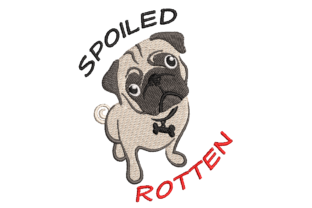
Spoiled Rotten Pug
First Impressions of This Machine Embroidery Design
When I first opened the Spoiled Rotten Pug machine embroidery design, I immediately recognized its appeal. The title alone tells you exactly what kind of customer this targets: pug owners who treat their dogs like royalty. As someone who has tested hundreds of digital embroidery files for craft fair products, I can tell you that designs with a clear emotional hook sell faster than generic alternatives. This one lands squarely in the funny, relatable, and slightly cheeky category that handmade market shoppers love.
The finished size sits at just over three inches, which makes it a versatile accent design rather than a full-coverage focal piece. That small footprint is a practical advantage when you are producing multiple items for a weekend booth. You can stitch it quickly, change thread colors efficiently, and maintain consistent quality across batches. For an Etsy seller or small shop product line, that kind of repeatability matters.
Pug owners will recognize the truth in the sentiment immediately. That instant recognition is what drives impulse purchases at craft fairs. When someone sees Spoiled Rotten Pug on a tote bag or tea towel, they do not need to read a long description. They smile, nod, and reach for their wallet.
Tote Bags and Market Bags
This is where I see Spoiled Rotten Pug generating the most sales. A simple canvas tote with this design centered on the front panel makes an excellent craft fair product. The three-inch size sits comfortably on a standard tote without overwhelming the bag or getting lost in the fabric. I recommend using a medium-weight cutaway stabilizer and a sharp needle to keep the lettering crisp. The design reads clearly from a few feet away, which is critical for booth display. Customers walking past your table should be able to catch the humor at a glance, and this design delivers that.
Apron Embroidery
Aprons are another strong candidate. Pug owners who love to cook or garden will appreciate the personal touch. The design works well centered on the chest pocket or placed slightly higher on the bib. Keep in mind that apron fabric can vary from lightweight cotton to heavier denim. Test your stitch density on a scrap piece before committing to a production run. If the fabric is too thin, the design may pull or pucker. A tear-away stabilizer topped with a water-soluble film helps the satin stitches stand cleanly on textured surfaces.
Tea Towel Embroidery
Tea towels are a staple of the handmade market, and Spoiled Rotten Pug fits the format beautifully. The three-inch size leaves room for the towel hem and allows you to position the design off-center for a modern look. I always advise using a dense stitch design on tea towels because the fabric is absorbent and textured. The design should sit on a stable layer of stabilizer to prevent distortion. A towel with a looped weave can hide small details, so check that the lettering and any fine lines remain visible after stitching.
Embroidered Patches
Patches are a low-cost, high-margin product for any embroidery business. You can stitch Spoiled Rotten Pug onto twill or felt, cut it out, and sell it as an iron-on or sew-on patch. The small size makes it ideal for patch collections. Customers can buy one for a jacket, a backpack, or a gift. Make sure your backing material is sturdy enough to handle the stitch density without curling. A hot-cut or laser-cut edge gives a professional finish that justifies a higher price point.
Caps and Hats
Curved cap surfaces present a challenge for any machine embroidery design. The three-inch size of Spoiled Rotten Pug works well on the front panel of a structured cap, but you need to pay attention to hoop placement and stabilizer choice. A cap hoop and a stiff cutaway stabilizer prevent the design from shifting. The lettering should remain readable even when the cap curves. I recommend testing one cap before producing a batch. If the design warps, you may need to adjust the density or reduce the size slightly.
Pillow Covers and Small Pouches
Home decor items like pillow covers give customers a way to display their love for their pug in their living space. The design works well centered on a throw pillow or positioned on a small zippered pouch. For pillow covers, choose a fabric with enough body to support the stitching. Linen, cotton duck, and heavyweight blends are good choices. Small pouches make great giftable handmade items, especially when paired with a matching tote or towel.
Practical Selling and Production Points
One of the strongest selling points of Spoiled Rotten Pug is how quickly it communicates its message. Customers at a craft fair do not have the patience to read detailed product descriptions. They scan, they smile, they buy. This design triggers an emotional response in pug owners, and that is the foundation of a successful handmade product.
From a production standpoint, the design is small enough to stitch in a single hoop without re-hooping. That means you can batch-produce dozens of items in a single session. If you are preparing for a weekend market, you want designs that move fast and stitch fast. Spoiled Rotten Pug fits that profile.
When photographing your finished products for online listings, the design reads well in close-up shots. The bold lettering and simple layout ensure that it does not disappear in product photos. A well-lit image of a tote bag or apron with this design centered will attract clicks on Etsy or your own shop site. Use a printable mockup to test different placements before you stitch the first batch. Mockups save time and thread.
Careful-Use Notes for Production Quality
No design is perfect straight out of the file. I always recommend a thorough test stitch before you commit to a production run. Here are the specific points I watch for with Spoiled Rotten Pug:
- Dense stitch areas: If the design includes satin stitches around the lettering or any filled sections, check that the density does not cause the fabric to pucker. Reduce density slightly if needed, or use a heavier stabilizer.
- Tiny details: Any small elements like eyes, noses, or decorative accents must remain legible after stitching. If the design compresses them too much, consider enlarging the overall size slightly if your hoop allows.
- Small lettering: The words "Spoiled Rotten Pug" need to be crisp and readable. If the lettering is too small or the font is too narrow, it may fill in or blur. Test on the actual fabric you plan to use.
- Thick fabric: On towels, denim, or fleece, the design may sink into the pile. Use a water-soluble topping and a fresh needle to keep the stitches on top of the fabric.
- Dark fabric: If you stitch on black or dark navy, make sure your thread colors contrast strongly. A light gray or white thread will pop; dark thread may disappear.
- Curved cap surfaces: As mentioned earlier, caps require special attention. The design must be digitized to handle the curve, or you may need to use a smaller hoop.
Visual Appeal and Customer Attention
At a craft fair, your booth display needs to stop people as they walk by. Spoiled Rotten Pug works well as a featured product because it combines humor with a specific pet niche. Pet owners are a loyal buyer demographic. They buy gifts for themselves, for their pets, and for fellow pet owners. A design that makes them feel understood will outsell generic animal motifs every time.
I recommend placing one finished product prominently on your table, perhaps a tote bag or apron displayed on a mannequin or hook. The bold lettering will draw eyes from a distance. Have a sign that says "Pug Owners" or "Spoiled Rotten" to reinforce the message. You can also create a small cluster of products all featuring the same design. Repetition builds recognition and makes your booth look cohesive.
For online listings, the design photographs well because it is compact and high-contrast. Use a neutral background and natural lighting to let the stitching speak for itself. Include a close-up shot that shows the texture of the embroidery. Customers want to see the quality of the finished product before they click buy.
Brand Consistency and Booth Display Strength
If you are building a brand around pet-themed embroidery, Spoiled Rotten Pug fits naturally into a collection of dog-related designs. It pairs well with other breeds or with general pet humor. The style is approachable and lighthearted, which appeals to a broad demographic. You can offer it in multiple colorways to match different bag or apron colors. That flexibility helps you maintain a consistent booth aesthetic while still offering variety.
One design asset that I find valuable is the ability to create a printable mockup for planning. Before I stitch a single item, I place the design digitally on a photo of a tote bag or towel to see how it looks. This saves time and helps me decide which products to prioritize. For Spoiled Rotten Pug, the mockup confirmed that the design works best on lighter fabrics where the contrast is highest.
Practical Embroidery Designer Notes
Before you start production, here is a checklist of steps I follow with every new machine embroidery design:
- Test on scrap fabric: Always stitch the design once on a piece of fabric similar to your final product. Check for tension issues, thread breaks, or design flaws.
- Check thread contrast: Hold your chosen thread colors against the fabric. If the design includes multiple colors, verify that they do not blend together.
- Review spacing: Ensure the design has adequate margin around the edges. A three-inch design needs at least a half-inch of clearance on all sides.
- Confirm hoop size: The design must fit within your hoop with room for stabilizer. A three-inch design fits in most standard hoops, but double-check.
- Inspect stitch density: If the design feels too dense or too loose, adjust the settings in your software. Dense designs can break needles on thick fabric.
- Use the right stabilizer: Cutaway for stretchy fabrics, tear-away for stable wovens, and water-soluble topping for textured surfaces.
- Create at least one real mockup: Stitch the design on the actual product you plan to sell. Photograph it and review it under booth lighting.
- Compare fabric colors: The same design looks different on white, cream, gray, or pastel fabrics. Choose the version that maximizes readability.
- Confirm commercial licensing: Before selling any finished product, verify that the digital embroidery file includes commercial use rights. This is a legal requirement, not a suggestion.
Final Thoughts on Spoiled Rotten Pug for Your Handmade Business
After reviewing Spoiled Rotten Pug from every angle, I can confidently say this is a strong addition to any craft fair product line. It appeals to a specific audience, it stitches cleanly at a practical size, and it translates well across multiple product types. Whether you are a seasoned Etsy seller or just starting your embroidery business, this design offers a reliable path to sales.
The key is to test thoroughly, display confidently, and price your finished products to reflect the quality of the embroidery. Pug owners are a passionate community, and they will appreciate the effort you put into creating something that speaks directly to them. Add Spoiled Rotten Pug to your booth lineup, and watch how often it stops customers in their tracks.